What Is NGX? Understanding Nigeria's Stock Exchange
21 September 2026
I remember the first time someone told me a company was "listed on the NGX," and I nodded like I understood, when really, I had no idea what that actually meant. Was the NGX a building? A website? A government office? It took me embarrassingly long to realize the NGX isn't a company at all, it's the marketplace itself, the place where companies and investors meet. If you've ever heard the term thrown around in the news, in a WhatsApp group, or by a friend who "just started investing" and wondered what it actually is, this article is for you.
What is NGX?
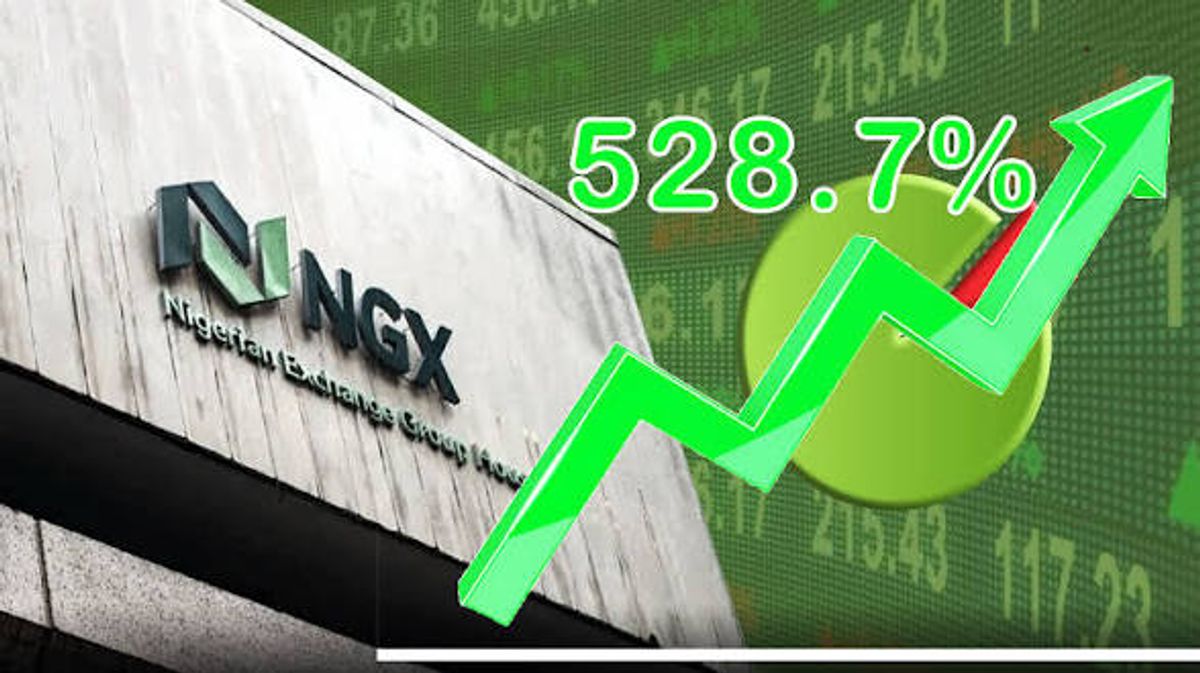
The NGX, short for Nigerian Exchange Limited, is Nigeria's stock exchange, the regulated marketplace where shares of publicly listed Nigerian companies are bought and sold. It doesn't manufacture anything, sell products, or run a business of its own. Instead, think of it as the venue: a fully electronic platform where companies raise capital by offering shares, and investors buy and trade those shares among themselves.
It's easy to confuse the NGX with a company or a bank, but the distinction matters. A bank holds your money and lends it out. A company makes and sells things. The NGX does neither, it simply provides the infrastructure, the rules, and the oversight that let buyers and sellers of shares transact safely and transparently. Every price you see move on a stock market app or hear mentioned on the news, that number exists because of what's happening on the NGX.
A Brief History of the Nigerian Stock Exchange
The NGX has been around far longer than most people realize. It was established on September 15, 1960 as the Lagos Stock Exchange, just weeks before Nigeria's independence, making it the oldest exchange in West Africa. It began small: operations started in 1961 with only 19 securities listed for trading.
In December 1977, the name was changed to The Nigerian Stock Exchange, and branches opened in major commercial cities across the country as the exchange expanded its national reach. The All-Share Index was launched in 1984, giving investors a single number to track the market's overall performance, something we still rely on today.
The most significant recent change came in 2021. The Nigerian Stock Exchange fully demutualised, transforming from a member-owned, not-for-profit entity into a shareholder-owned, profit-making one. This gave rise to the structure we know today: Nigerian Exchange Group Plc (NGX Group), with its subsidiaries Nigerian Exchange Limited (the operating exchange), NGX Regulation (an independent regulatory arm), and NGX Real Estate. In plain terms, the exchange stopped being run like a club for its member-brokers and started being run like a proper company, with its own shareholders, accountable to modern governance standards.
How Does the NGX Work?
If you've read about how stocks work in general, the mechanics here won't surprise you, companies list, investors buy in, shares trade daily. What's worth knowing specifically about the NGX is how that trading happens today: there's no physical floor anymore, no people shouting orders across a room. Everything runs through licensed stockbrokers and digital trading platforms, matched electronically by the exchange.
One recent structural change is worth flagging: Nigeria's capital market moved to a faster settlement cycle in 2026, trades on the NGX now settle just one business day after execution, down from two, meaning investors get paid or receive their shares faster than before.
What is Listed on the NGX?
The NGX isn't limited to ordinary company shares, though that's what most beginners think of first. The exchange also lists:
- Ordinary shares : the main focus for most retail investors, representing direct ownership in a company.
- Bonds and fixed-income securities : including government and corporate bonds, which function more like loans than ownership stakes.
- Exchange-Traded Products (ETPs) : funds that track a basket of stocks or an index, letting investors gain broad market exposure in a single purchase.
For a beginner, the key takeaway is this: when people talk about "investing in the NGX," they usually mean buying ordinary shares, but the exchange is really a marketplace for several types of financial instruments, not just stocks.
What Companies are Listed on the NGX?
A company being "listed" means its shares are available for the public to buy and sell on the exchange. To get there, a company must meet the NGX's disclosure, governance, and financial requirements, and remain accountable to shareholders and regulators going forward.
Nigeria's exchange currently lists a range of well-known companies across banking, oil and gas, consumer goods, telecoms, and industrials, names Nigerians would recognize from everyday life, from the banks they use to the goods on supermarket shelves. Not every Nigerian company is listed, most aren't. Listing is often a milestone, a sign that a business has grown large and transparent enough to open itself up to public ownership and regulatory scrutiny. Unlisted companies, by contrast, remain privately owned, with shares that aren't available for the public to trade.
How are NGX Stock Prices Determined?
Prices on the NGX move for the same reasons prices move on any exchange, supply and demand, company performance, and broader economic conditions. What's worth highlighting here is just how dramatic that movement has been on the NGX, especially this year: the All-Share Index climbed from roughly 155,600 points at the end of 2025 to over 244,000 points by mid-September 2026, a gain of more than 56.81% in under nine months, driven heavily by bank recapitalisation and strong performance in the oil and gas sector. That kind of move shows how quickly collective investor sentiment, not just individual company news, can reshape an entire market.
What Is the NGX All-Share Index?
A stock market index is a single number used to track the overall performance of a group of stocks, a way of answering "how is the market doing?" without checking every company individually.
The NGX All-Share Index (NGX ASI) is Nigeria's main benchmark index, tracking the combined performance of all equities listed on the exchange. When you hear that "the NGX gained 2%" or "the market closed lower today," that's almost always a reference to the ASI.
It's important for beginners to understand that the index can rise even while some individual stocks fall. The ASI reflects the market as a whole, weighted by the size and performance of its constituent companies, so a strong rally in large sectors like banking or oil and gas can lift the entire index even if a handful of smaller stocks are struggling. In other words: don't confuse the index with any single stock you own. A green index doesn't guarantee every portfolio is green too.
Who Regulates the Nigerian Capital Market?
The Securities and Exchange Commission (SEC) is Nigeria's apex capital market regulator, responsible for protecting investors, maintaining fair and transparent markets, and overseeing everyone from stockbrokers to the exchange itself. The SEC's role has only expanded recently: Nigeria's Investments and Securities Act 2025 significantly broadened the SEC's supervisory powers, strengthening investor protection and enforcement capabilities across the capital market.
It's worth understanding the difference between the SEC and the NGX, since beginners often conflate the two:
- The SEC is the government regulator. It sets the rules, licenses market operators, and enforces compliance across the entire Nigerian capital market, not just the NGX.
- The NGX is the exchange itself, the marketplace where trading actually happens, operating within the rules the SEC sets.
Since the 2021 demutualisation, the NGX also has its own internal regulatory arm, NGX Regulation (NGX RegCo), which monitors listed companies and dealing members for compliance, working alongside the SEC rather than replacing it. For a beginner, the practical takeaway is simple: always invest through an SEC-licensed broker or platform. That licensing is what separates a legitimate investment from a scam.
NGX vs. Foreign Stock Markets
It's natural to wonder how the NGX compares to exchanges people hear about internationally, like the New York Stock Exchange (NYSE) or Nasdaq.
- Size. The NYSE and Nasdaq are among the largest exchanges in the world, home to trillion-dollar companies. The NGX, while the largest and oldest exchange in West Africa, is considerably smaller in market capitalisation and trading volume.
- Currency and companies. NGX-listed companies trade in naira and are almost entirely Nigerian businesses. NYSE and Nasdaq list companies from around the world, priced in US dollars.
- Market classification. Nigeria's market status has shifted in recent years; as of September 2026, FTSE Russell reclassified Nigeria back to Frontier Market status, a category that tends to attract different kinds of foreign investment than more established "emerging" or "developed" markets.
None of this makes the NGX less legitimate, it simply means Nigerian and international markets serve different investor bases, with different risk profiles, liquidity levels, and growth stories. Some Nigerian investors choose to hold both local and international investments for this reason, though that's a more advanced conversation than "what is the NGX."
Common NGX Terms Beginners Should Know
- NGX: Nigeria's main stock exchange, where shares of listed companies are traded.
- Stock/Share: A unit of ownership in a company.
- Listed company: A company whose shares are available for public trading on the exchange.
- Stockbroker: A licensed intermediary who executes buy and sell orders on an investor's behalf.
- Market capitalisation: The total value of a company's shares, or, for the whole exchange, the combined value of everything listed on it.
- NGX All-Share Index (ASI): The benchmark index tracking the overall performance of NGX-listed stocks.
- Bull market: A sustained period of rising prices.
- Bear market: A sustained period of falling prices.
- Portfolio: The collection of investments an individual or institution holds.
- Trading volume: The number of shares traded over a given period, a signal of how active or liquid a stock is.